
The ironing board lived in the hall closet for eleven years. I would drag it out, set it up, press one linen shirt, and then leave it standing in the middle of the bedroom for a week, because folding it back up felt like more work than the pressing did. What finally made me look for something else was a silk scarf with a hard crease down the middle that no amount of careful ironing would lift without leaving a shine on the fabric. So I bought the Conair handheld steamer, the one with three attachments and the removable water tank, and I have reached for it most mornings since.
I am not a gadget person. I am sixty-four, I spent twenty-two years on the floor and then behind the accessories counter of a department store, and I know what a pressed blouse is supposed to look like. This is not a review written by somebody excited about a box. It is what I found after months of using this steamer on scarves, blouses, curtains, a linen jacket and one pair of trousers that had been folded in a drawer so long the crease had set like a pleat.
The Quick Verdict
Fast, light, and genuinely useful on the fabrics I actually wear. It will not replace a real iron for a sharp trouser crease, and the tank is smaller than I would like, but it earns the shelf space it takes up.
Amazon Check Today's Price →The steamer that got my ironing board out of the hallway
It heats in about forty seconds and runs off a 7.3-ounce removable tank, which is why it gets used on a Tuesday morning when nothing else would. If the board is the reason you skip whole drawers of clothes, start here.
Amazon Check Today's Price on Amazon →How I've Used It
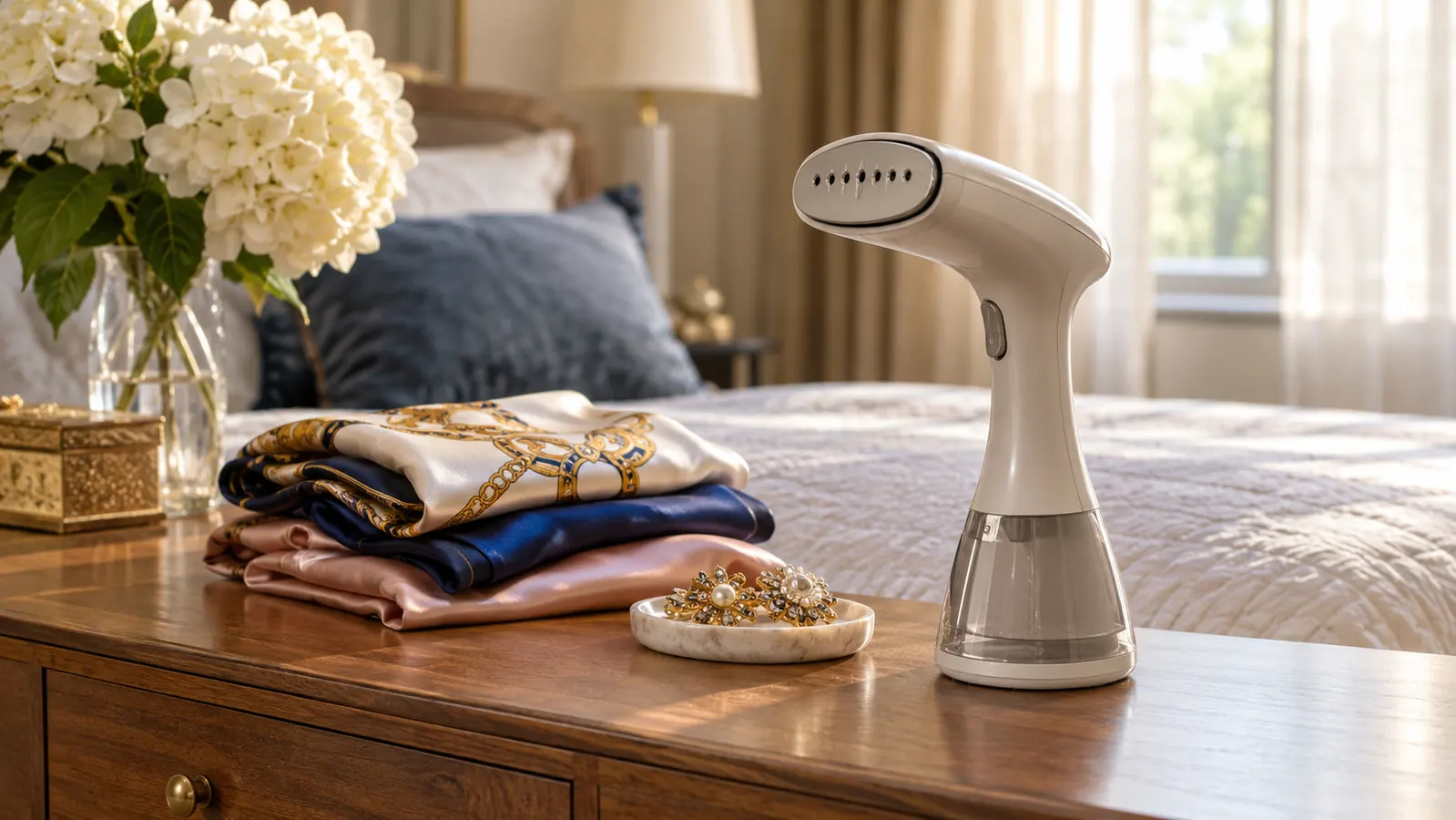
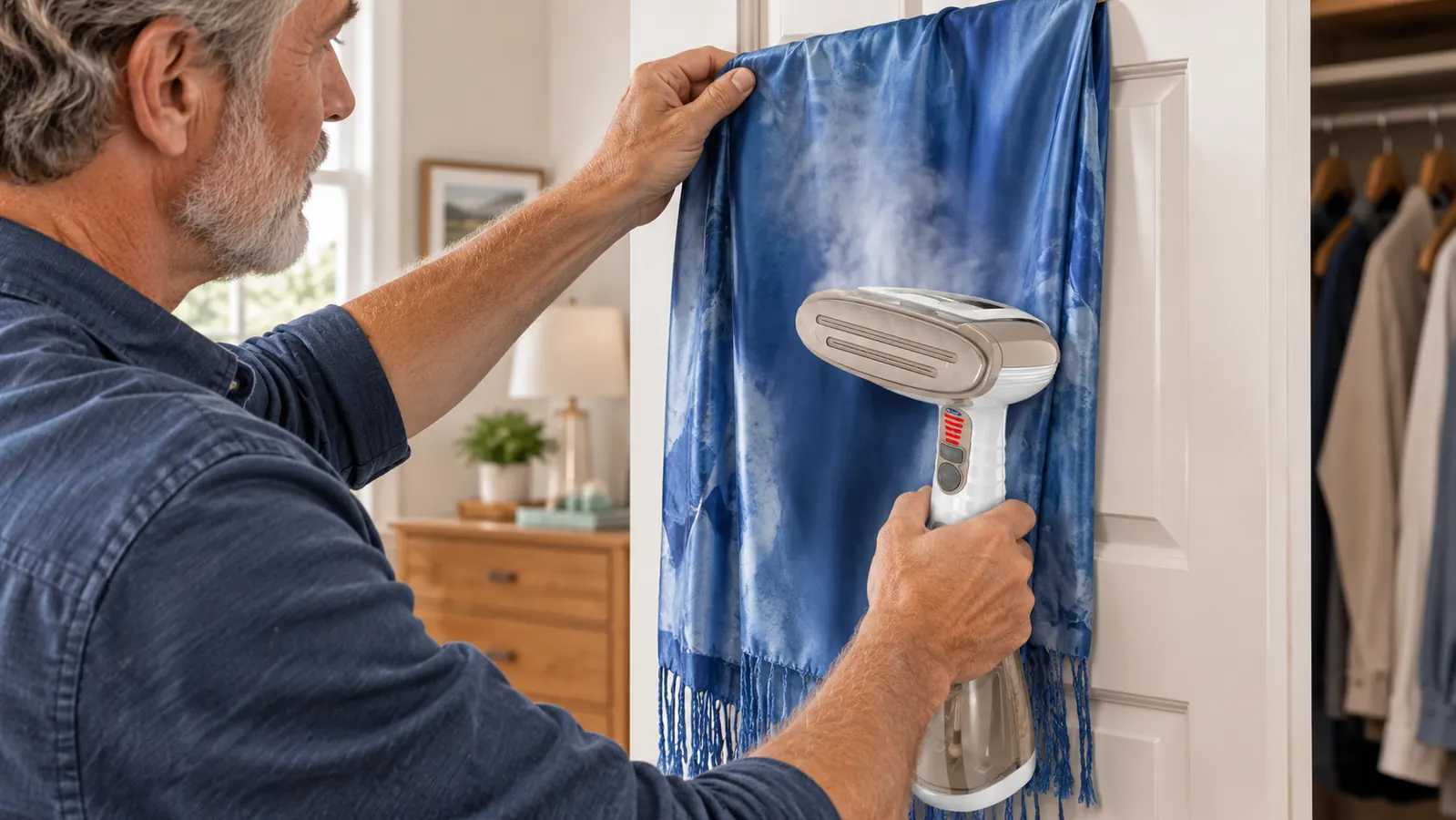
The steamer sits on the long dresser in my spare bedroom, which I turned into a dressing room years ago. One closet, one dresser, one wall I keep filling with brooches and small keepsake boxes. The dresser is six feet long and the steamer takes up the last hand's width of it, standing beside a shallow dish where I drop my clip earrings at night. For the first week the manual sat right on top of it because I was sure I would need to look something up. I never did. That tells you how I actually use it: I pull a scarf off the stack, hang it over the closet door, run the steamer down it for maybe fifteen seconds, and put it on. That is the whole ritual. No board, no pad, no walking away to let something cool before I touch it.
I have also used it on the living room curtains, which is the job I put off longest because I assumed it would be a waste of an afternoon. It was not. There are three panels across the front window, and I did them on a Saturday morning in spring with the window cracked open, which turned out to matter because that room gets close with steam in it. Running the steamer over them while they hung, working from the top down, took about ten minutes a panel. Half an hour, with a break in the middle to refill. My mother would have said to just wash them, and she would have been right, but washing curtains means re-hanging curtains, and this was less work for a result I could see from the street.
My daughter Becca borrows things when she drives over from Tampa. She took a dress to a wedding and brought it back creased inside a garment bag, which is exactly what a garment bag does to a dress. Twenty minutes with the steamer and it was wearable again. That is the pattern with this thing: it does not perform a dramatic rescue on a badly wrinkled piece, but it makes almost everything look like it was taken care of.
The 40-Second Heat Time Is the Whole Point
The steamer is rated to heat in forty seconds, and in my house that is close to honest. I switch it on, hang the garment, and by the time the hanger is on the door hook there is steam coming out. I timed it once, on a Tuesday in February when I was already running late for a doctor's appointment, and I had steam inside a minute from a cold start with a tank filled the night before. Forty seconds does not sound like much until you set it beside the alternative: heating an iron, filling an iron, waiting for the iron to settle, and then finding the board. The entire reason this gets used is that starting it costs almost nothing.
It runs on 1875 watts, and that is the part I notice on heavier fabric. Linen and cotton duck take steam faster than my old iron ever managed, and I do not have to press down to get a result. I hold the head an inch or so off the fabric, let the steam travel, and move down in slow passes. If you press it flat against the cloth the way you would an iron, you will not get the same finish and you will wonder what all the fuss was about. Let the steam do the work.
The 7.3-Ounce Tank and What 20 Minutes Really Gets You
The water tank holds 7.3 ounces and lifts off for filling, and Conair rates it at up to twenty minutes of continuous steam. Twenty minutes is real if you are working through one garment after another without stopping. It is not real if you are like me and set the thing down between pieces to answer the phone or tell Walt where his keys are. A full tank covers about three or four blouses, or one pair of curtains, before I want to top it up.
Refilling is not a production. The tank twists off, goes to the kitchen tap, comes back, and you are steaming again. Conair lists a limited two-year warranty, which I copied onto the inside cover of the manual and filed in the top dresser drawer, and I have not needed it. But here is my honest complaint: I wish the tank were bigger. Twice a year I go through the closet and steam everything I am about to hang for the season, and on those afternoons I am refilling four or five times. It is a small annoyance rather than a dealbreaker, but it is the first thing I would change.
The Three Attachments and the One I Reach For Most
The steamer comes with three removable attachments, and I will be honest with you: one of them does nearly all my work and the other two live in the drawer. For scarves, blouses and curtains, the plain pass is all you need. Where the extras matter is anything with an edge you want to look deliberate. Conair builds a creaser into the plate, and that is the part that earns its keep on trouser fronts and the placket of a shirt. It gives you a line instead of a soft cloud, which is the difference between looking pressed and looking merely uncreased.
The plate itself is quilted aluminum and it heats along with the steam, so you get a little pressing as well as steaming. That combination is why this handles a cotton shirt better than I expected it to. Steam alone softens a crease. A warm plate smooths it. Together they do a decent impression of an iron on everything except the most stubborn set-in wrinkles, and they do it without scorching anything.
What It Did to My Scarves, My Curtains and the Armchair
The scarves are the reason I keep it. I have a drawer of silk scarves, most of them picked up at thrift stores and outlet malls, and silk is the fabric that punishes an iron. One touch too hot and you have a permanent shine you cannot undo. I did that to a cream scarf about six years ago, down near one corner where the iron sat a moment too long, and I have never quite forgiven myself for it. The steamer has not marked a single scarf. I hold it back a little, let the steam pass through, and the creases fall out. The rolled hem stays rolled, which was the thing I worried about most, and the flat middle comes out smooth without that pressed-flat look. If you have been avoiding silk because pressing it is a gamble, this is the tool that takes the gamble out of it.
Curtains were the surprise. The folds at the bottom, where they had been tied back for a year, came out completely, and the panels hung straighter afterward. Upholstery was the second surprise. The listing mentions upholstery, so I tried it on the armchair Walt sits in, and it lifted the dull sheen where the arms had gone shiny and smoothed the creases in the skirt of the chair. I want to be clear that it is a steamer and not a shampooer. It does not clean anything. But for freshening a chair between cleanings, it did what I hoped it would.

Where It Fights Me
It is not an iron and it will not pretend to be one. A hard crease down the front of a dress trouser is beyond it, at least to my standard. I tried it on a pair of navy trousers that had been folded in a drawer for two winters, and the steamer softened the fold and took the shine off, but the line came out fuzzy rather than sharp. The creaser helps, but if you want a military edge you want an iron and a pressing cloth. Same for a man's cotton dress shirt with starch in it. Walt's shirts still go to the cleaner, and I have made my peace with that.
The other thing is the weight and the reach. The steamer weighs about a kilogram, which is nothing for a scarf and noticeable after ten minutes with your arm overhead at a curtain rod. The cord is eight feet, which is generous, but eight feet is not the same as reaching the far corner of my living room, so I move a chair and unplug and replug. Conair says no spitting or wet spots, and for the most part that held for me. The one time I got a damp patch on a blouse was the time I filled the tank past the line.
And it stays warm for a while after you unplug it, so you need somewhere safe to set it down. Mine goes on the dresser on a folded towel. That is less a complaint about the steamer than a reminder that anything making steam in forty seconds is a hot object, and if you have grandchildren in the house you will want to think about where it lands.
What My Thursday Lunch Group Wanted to Know
I eat lunch every Thursday with three women I worked with, and when I brought this up, one of them asked whether it was worth it, since she irons maybe twice a month and does not mind it. My answer was that it depends on which part bothers you. If the ironing itself is the chore, this will not save you much. If dragging the board out and setting it up is the part that stops you, then anything that removes that step gets used, and this removes it.
What I told them, and what I would tell you, is that this is a different tool for a different job rather than a better iron. The job it does well is taking the crease out of something you want to wear this morning, in under a minute, with nothing to set up. That is most mornings at my house, and it is why the ironing board is still folded in the hall.
What I Liked
- Heats in about forty seconds, which is the reason it actually gets used on a busy morning
- 7.3-ounce removable tank lifts off and fills at the kitchen sink
- Warm quilted aluminum plate plus the built-in creaser handles cotton and linen properly
- Has never marked a silk scarf, which my iron could not promise
- Eight-foot cord and a shape that sits comfortably in the hand
- Three removable attachments cover both soft work and edges
Where It Falls Short
- Twenty minutes of steam goes quickly when you are doing a whole closet
- Will not produce a hard crease on dress trousers
- Around a kilogram gets heavy when you are working overhead on curtains
- The warm plate needs somewhere safe to sit and cool
- Not a replacement for the cleaner on starched dress shirts
Ten minutes a panel, and the folds at the bottom where they had been tied back for a year came out completely.
Who This Is For
If you are the woman who avoids a whole drawer of clothes because pressing them is a bother, this is for you. If you have silk scarves, lightweight blouses, linen, or curtains that have been hanging creased for two years, this is for you. If you are like me, sixty-four with a dressing room that used to be a spare bedroom and a dresser that has turned into a staging area, you will find a spot for it and you will use it more than you expect to.
Who Should Skip It
If you wear starched dress shirts five days a week and you like a hard crease, keep your iron and keep your cleaner. If what you want is one tool that does everything, this is not that tool, and I would rather tell you now than have you find out on a Sunday night with a shirt in your hand. And if you have a large house with a great many curtains, the small tank will wear on you before the afternoon is over.
For everything except Walt's starched shirts
Forty-second heat up, a 7.3-ounce tank, a warm plate and a creaser. If you have been ironing silk and hoping for the best, this is the version of the job that stops being a chore.
Amazon Check Today's Price on Amazon →