

My ironing board lived behind the spare bedroom door for eleven years. Every time I dragged it out I asked myself the same question: why am I pressing a silk scarf flat with a hot plate?
I am sixty-four. I spent twenty-two years on the floor of a department store, and a good part of that behind the accessories counter, so I have handled a great many scarves, blouses, and sheets of tissue paper. Two years ago I bought the Conair handheld steamer and the board went back into the closet, where it has stayed. The Conair does not do everything an iron does. It does the things I actually need done, in the four minutes I have before I walk out the door. Here are ten reasons it earned its spot on the dresser, in the order I noticed them.
Start with the one garment you keep skipping
The Conair heats in about 40 seconds, so there is no session to plan and no board to wrestle. Pull out the blouse you have been avoiding, hang it on the closet door, and see what twenty minutes of steam does to it. Worst case, you lose four minutes.
Amazon Check Today's Price on Amazon →Forty seconds to heat, not fifteen minutes to set up
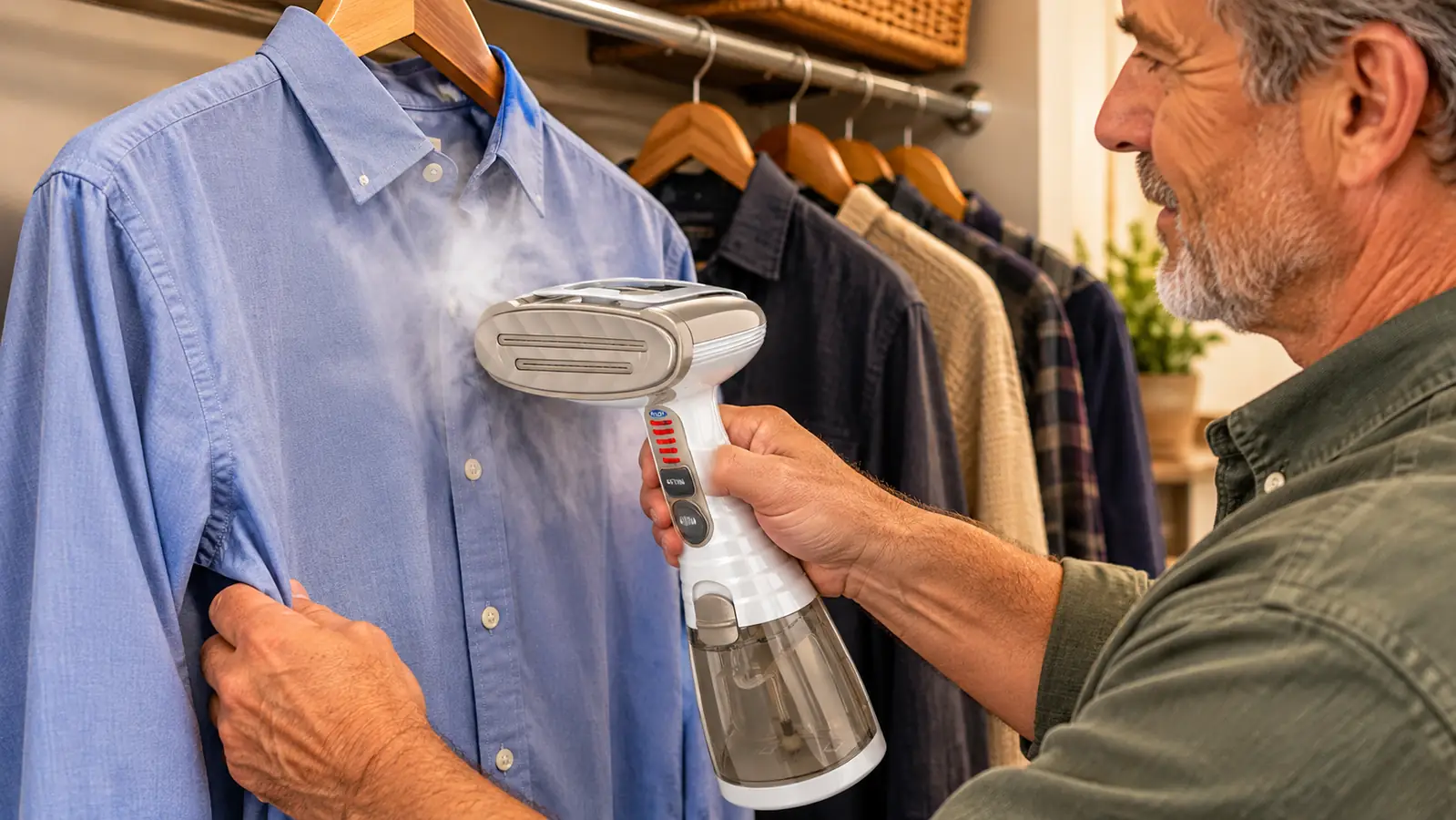
An iron is a commitment. Out comes the board, up goes the pad, you hunt for the spray bottle, you wait for the plate to come up to temperature, and by then you have talked yourself out of the blouse entirely. The Conair is ready in about 40 seconds. I hang the blouse on the closet door, plug the steamer in, and by the time I have found a decent hanger it is already throwing steam. That is the whole difference between pressing something and deciding not to.
A 7.3-ounce tank that runs about twenty minutes
The water tank holds 7.3 ounces and the listing puts it at up to 20 minutes of continuous steam. In my hands that is a blouse, a pair of trousers, and one scarf, which is a normal Tuesday around here. The tank comes off the unit, so I fill it at the kitchen sink instead of carrying a cup of water down the hall and slopping it on the carpet. If you were steaming an entire closet in one go you would refill once. I do not steam an entire closet in one go.
Silk scarves come back soft instead of flattened
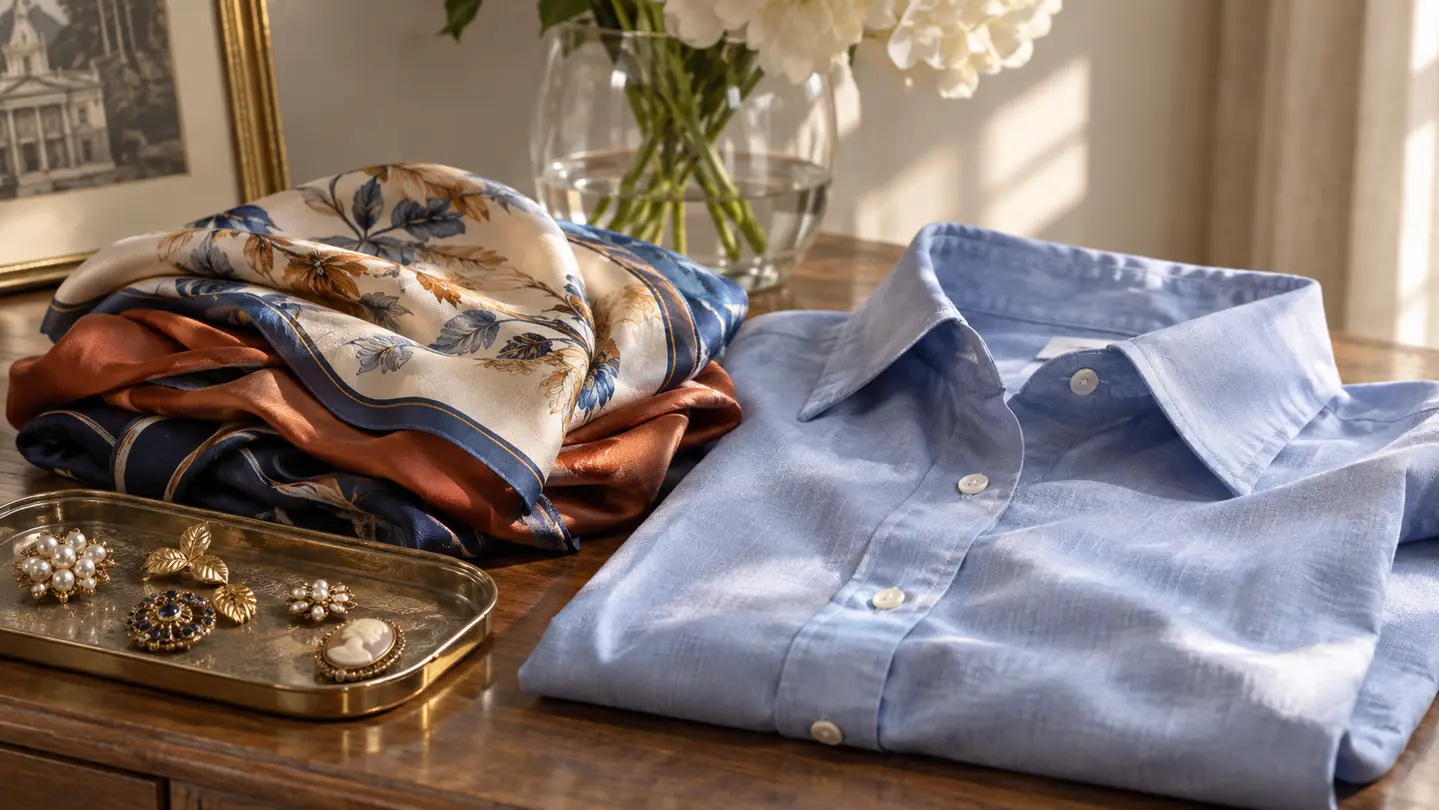
An iron flattens silk, and if you leave it there long enough the shine sets in and no amount of care afterward lifts it out. Steam relaxes the weave instead of crushing it. The scarf that has been folded in the drawer since spring comes back with a little life in it and the rolled hem stops curling up like a dry leaf. I do it hanging, three or four slow passes, and then it goes straight onto the hook by the door.
The built-in creaser puts the edge back on a cotton shirt
This is the part I did not expect. There is a heated soleplate, a quilted aluminum plate, and a built-in creaser, and that creaser does more for a cotton sleeve than I gave it credit for. Run it along the sleeve and you get an edge, the kind a shirt is supposed to have. It is not identical to a board, a pressing cloth, and starch. It is close enough that Walt has stopped asking whether his shirt got done before church.
Curtains and upholstery get done where they hang
I have a set of curtains in the dressing room that has been up for six years. Taking them down, washing them, and hanging them back is a whole Saturday gone. Steaming them on the rod is twenty minutes and a step stool. The same goes for the chair by the window and the ottoman, since the steamer is sold for upholstery as well as clothes. You do not take anything apart. You work down the panel in sections and let the steam do the work.
Three removable attachments replace the tricks I used to improvise
Three removable attachments come in the box and I use all three depending on what is hanging in front of me. They click on and off without a wrestle, which matters when your hands are dry from the winter. What they really replaced was a shelf of workarounds I had collected over the years: the damp towel over the sleeve, the spray bottle of vinegar water, the trick of hanging a shirt in the bathroom while the shower runs. That shelf is gone now and I do not miss it.
An eight-foot cord that finally reaches the outlet
The cord is eight feet long. My dressing room has exactly one outlet and it is behind the dresser, which used to mean an extension cord snaking across the floor every time I wanted to press anything. Eight feet gets from that outlet to the closet rod with room to spare, and to the curtains if I stretch a little. Small thing, I know. But I have tripped over that extension cord more than once, and at my age a fall is a bad month.
It sits on the dresser at 8 by 5.6 inches
The steamer measures 8 inches long, 5.6 inches wide, and 13.6 inches tall, and it weighs just over a kilogram. That is roughly the footprint of a hardback book standing on end. Mine lives on the end of the long dresser next to the jewelry trays, plugged in and ready. A thing that has to be fetched down from a shelf and unpacked does not get used. This one gets used because it is already out where I can see it.
1875 watts for the heavy fabrics too
The listing puts it at 1875 watts, and that does show up on the heavy things: a wool blazer, a lined cotton skirt, the curtains. Light fabrics take one pass. The heavy ones take two or three with the soleplate resting against the fabric. That is the honest trade. You give up a little speed on thick fabric in exchange for not scorching the delicate ones, and after twenty-two years of watching people buy both, I know which one I would rather be careful with.
My daughter borrows it, which says more than I can
Becca lives in Tampa and she borrows things when she visits. She took the steamer home for a weekend in March and I had to ask for it back, which I do not do lightly. She is in her thirties and owns an iron she has never once plugged in. That is the whole endorsement, really. This is the one that gets used by two generations of women who both hate the board and both own too many scarves to iron them.
What I'd Skip
If you are standing in the aisle deciding, here is what I would leave on the shelf. Skip the full-size floor steamer unless you have a closet the size of my spare bedroom, because it is a second piece of furniture and it needs floor space you probably do not have. Skip the starch and the pressing cloths, because steam does not need them and they only add steps. Skip anything that promises a permanent crease in wool, from any brand, because wool does what wool wants. And skip the idea that this replaces a tailor, because it does not. A hem is still a hem, and a missing button is still a needle and thread. What the Conair replaces is the board, the setup, and the fifteen minutes you were never going to spend on a Tuesday morning anyway.
Forty seconds to heat, twenty minutes of steam, and the ironing board has been in the closet for two years.
The blouse at the back of the closet is still waiting
You already know which one it is. The Conair heats in about 40 seconds, holds 7.3 ounces of water, and sits on the dresser between uses so it is never a project. Limited two-year warranty if that helps you make up your mind.
Amazon Check Today's Price on Amazon →