

The Lifewit Purse Organizer arrived in a flat box on a Tuesday, and by that afternoon I had already found its first limitation. I carried it up to my dressing room, set it on the closet shelf, and tried to stand my everyday satchel in one of the slots. The dividers top out at six and a half inches. That satchel is closer to nine. It went over sideways like a tired dog. No listing photo is going to show you that, and it is the first thing I want to tell you before you order one.
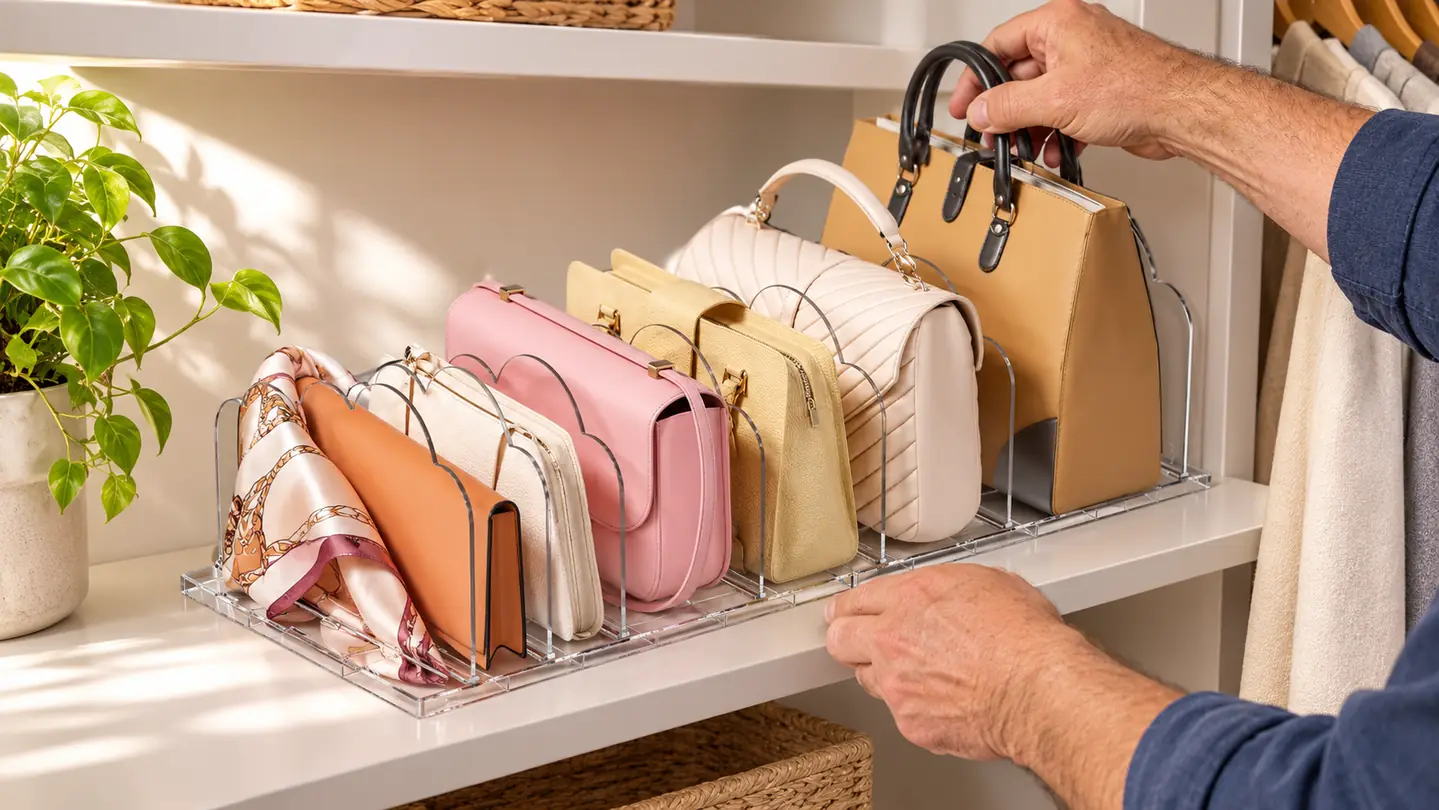
So let me be straight about what this thing is. The Lifewit Purse Organizer is a clear plastic shelf insert: two bases, seven dividers, no tools, no drilling, nothing to hang. It is not a closet system and it will not turn a jumbled shelf into a boutique display. What it does is keep four or five bags from lying on top of each other, and it lets you see what you own at a glance because the whole thing is clear. Whether that is worth the shelf real estate depends entirely on the shape of your bags. I have opinions about that.
For context, I did not go looking for an organizer because I am tidy. I went looking because my closet shelf had become a pile. Four bags stacked, a wallet wedged between them, two silk scarves balled up underneath, and a dust bag holding something I could not identify without lifting the whole heap. I am 64, I worked an accessories counter for years, and I know better than to treat leather like laundry. That pile was not doing my bags any favors. I wanted something that would make each bag its own thing again, without Walt having to get his drill out.
The Quick Verdict
A useful, honest, slightly homely shelf divider. Excellent for clutches, wallets and structured bags under six and a half inches tall. Not much use for tall satchels and slouchy hobos, and the clear plastic will never look like furniture.
Amazon Check Today's Price →Six and a half inches of clearance. Go measure your favorite bag before you do anything else.
That single number decides whether this review applies to you. If your bags stand shorter than that, this earns its shelf. If they do not, you just saved yourself a return.
Amazon Check Today's Price on Amazon →The Part Nobody Mentions: It Is a Shelf Tool, Not a Closet Cure
The listing calls it a purse organizer for the closet, and that is accurate as far as it goes. The word closet is doing a lot of work there, though. This is a freestanding insert that sits on a shelf. It does not hang from a rod, it does not mount to a wall, and it does not stack on the floor. The mounting type on the listing says freestanding, and that is exactly right. It is a shallow tray with upright dividers in it, and gravity is the only thing holding it in place.
That matters because where you put it decides whether you like it. My dressing room closet has one shelf above the hanging rod, and it is deep enough that the base sits back with a few inches to spare. The base depth is 9.3 inches, and the full run with both bases side by side is 24.6 inches. If your shelf is shallower than about ten inches, the front of the base will hang over the edge, and a bag sitting in the front slot will feel like it is about to tip every time you reach for it.
Before I bought it I did the thing I should have done first: I carried Walt's tape measure up to the closet and wrote the numbers on the back of an envelope. Shelf depth, thirteen and a half inches. Clearance between the shelf and the rod above, eleven. That envelope is the reason the organizer fit on the first try instead of going back in the box. If you do one thing before you order, do that. A minute with a tape measure saves you a return.
The upside of a freestanding piece is that you can lift the whole thing out and wipe it down, or carry it to the bed if you feel like sorting properly. No drilling also means no holes in a closet I would have to explain if we ever sold the house. Walt was pleased about that part specifically. He has patched enough of my projects over the years that the words no tools needed got an actual out-loud thank you.
How I've Used It Since It Arrived
It went on the left end of the shelf, and the second base went to the shelf in the spare room where I keep the things Becca has not borrowed yet. Two bases, two locations, which is the most useful thing about the design. You are not stuck with one long unit that either fits your shelf or does not.
In the dressing room base I keep my clutches, a couple of small crossbody bags, and my folding wallets. Four slots hold the small pieces and I left two wider by pulling dividers out, which is the adjustable part. The dividers snap into the base and you can space them however you like. It took me about ten minutes to find the spacing that suited me, done with my hands and nothing else. That is the entire assembly story. There is nothing to screw, nothing to read twice, and nothing that can be installed upside down.
What I tried first, for the record, was a clear shoebox with the lid thrown away. It held two clutches and tipped over every time I pulled one out, and by the end of the week a corner had cracked. Before that I used a wire basket, which snagged the lining of a small bag I am still cross about. The Lifewit does the same job as both of those with a wider base and edges that do not catch on fabric, and that is the honest reason I kept it. It is not a clever idea. It is a shoebox that grew up.
The clear sides mean I can stand at the closet door and see, without touching anything, whether the bag I want is in there. That sounds like a small thing until you have spent a morning digging through a stack. It also means I can see what is missing. Becca borrowed a bag in April and I knew it was gone the second I looked at the shelf, which is a different kind of useful.
One Saturday in April I swapped my winter bag for a lighter one, which used to mean emptying the whole shelf onto the bed and then putting it all back wrong. This time I stood at the closet, lifted one bag out of its slot, set the other in its place, and shut the door. That is the whole story and it is not exciting. It is also the difference between a job I put off for three weeks and a job that took forty seconds.
What surprised me is that I stopped using dust bags for the small pieces. Half of them were going into a dust bag and then into the pile, which meant dust bag plus pile plus a hunt, and none of that was protecting anything. Now the small bags stand in the open in the Lifewit, and the ones that actually need covering still get their bags and still go on the top shelf. I am not saying a plastic divider protects leather. I am saying it made me honest about which bags were being protected and which were just being hidden.
Two bases, seven dividers, ten minutes with no tools. What it fixed was not the closet. It was the morning hunt through a pile of bags.
What It Holds Well
Structured bags shorter than six and a half inches are the sweet spot. Clutches, small top-handle bags, boxy little vintage pieces. They stand up in the slots and stay standing, and the divider keeps them from leaning into each other. My beaded evening clutch has lived in the same slot since spring and has not slid down once.
I measured a few of them, because numbers are more use than adjectives. My beaded clutch is eight inches wide, four tall and two deep. The little black top-handle bag is nine by six by three, which sits right at the limit and stands with about half an inch to spare. A folding wallet is four by seven and disappears into a slot. Anything I own that stands taller than six and a half inches does not go in this, and I have stopped trying to make it.
It is also good for the things that live near bags. I have one slot with folded silk scarves, which is where scarves belong as far as I am concerned, and the listing mentions shirts and sweaters too. A folded knit takes a slot nicely. The slots are wide enough that a folded sweater sits flat rather than bulging up over the top of the divider.
The edges of the dividers are wavy rather than squared off, and the listing says that is to protect what presses against them. My good silk scarf has been leaning on that edge since spring and there is no snag, no pulled thread, nothing. The bottom of each base has reinforced ribs, and it does feel stiffer than the cheap plastic bins I have bought before and regretted. The whole thing is plastic, there is no pretending otherwise, but it is thick plastic with some thought behind it.
Adjustable spacing is the feature I underrated. I assumed I would set it once and forget it. I have moved the dividers three times, once for a batch of small evening bags and once to make room for the wallet I use every day. It is a two second job each time, and being able to do it without emptying the whole shelf is the reason I keep bothering.
The Three Things That Annoyed Me
First, the height. Six and a half inches is the maximum, and that is not a suggestion, it is the top of the divider. My satchel, my bucket bag, and the hobo I carry all winter exceed it. They do not fit standing up, and a bag that cannot stand up in a divider slot is a bag lying on its side in a divider slot. If most of your bags are big, this will frustrate you, and no amount of clever spacing fixes it. Nothing about the design is wrong. It is simply built for smaller pieces.
Second, clear plastic is honest to a fault. Every scuff shows. Every bit of closet dust settles on it and announces itself. The finish is polished, so fingerprints sit exactly where you touched it last. I wipe mine with a damp cloth about once a month, which takes thirty seconds, but if you want your closet shelf to look like a magazine photograph, clear plastic is not the material that gets you there. It shows you your bags. It also shows you your housekeeping.
The dust is worse in the spring, when the windows are open and the oak pollen comes through the screens. I wiped the whole thing down on a Sunday morning in March, and by the next weekend the tops of the dividers had a visible film on them again. If you keep the closet door shut and the house closed up, you will not notice it half as much. My windows are open from March to May, so I keep a rag in the drawer.
Third, and this is the one that made me sigh, the base is 9.3 inches deep. My shelf is deep and it was fine. My daughter's closet in Tampa is not, and when I described this to her on the phone she said her shelf is barely twelve inches and half of it is taken up by a folded blanket. On a shallow shelf you lose usable depth, and you end up with the organizer pushed to the back and the front slot hard to reach. That is a shelf problem, not a product problem, but you will be the one living with it.
Honorable mention: a heavy bag wedged into a narrow slot will bow the divider a little. The reinforced ribs at the bottom stop the base from sagging, but the uprights are plastic and they have some give. I would not cram a loaded tote into a four inch gap and expect the divider to stay perfectly upright after a season of use.
What I Liked
- Clear sides let you see every bag without lifting anything
- Adjustable dividers snap in by hand with no tools and no drilling
- Two separate bases can go on two different shelves
- Wavy divider edges and reinforced bottom ribs feel sturdier than typical plastic bins
- Handles clutches, wallets, folded scarves and folded knits neatly
- Backed by a one year Lifewit warranty
Where It Falls Short
- Dividers top out at 6.5 inches, so tall satchels and hobos will not stand
- Polished clear plastic shows dust, scuffs and fingerprints
- The 9.3 inch base depth eats shelf space on shallow shelves
- A heavy bag wedged tight can bow the uprights slightly
- Not a hanging or door mounted organizer, so it needs shelf real estate
What My Thursday Lunch Friends Said
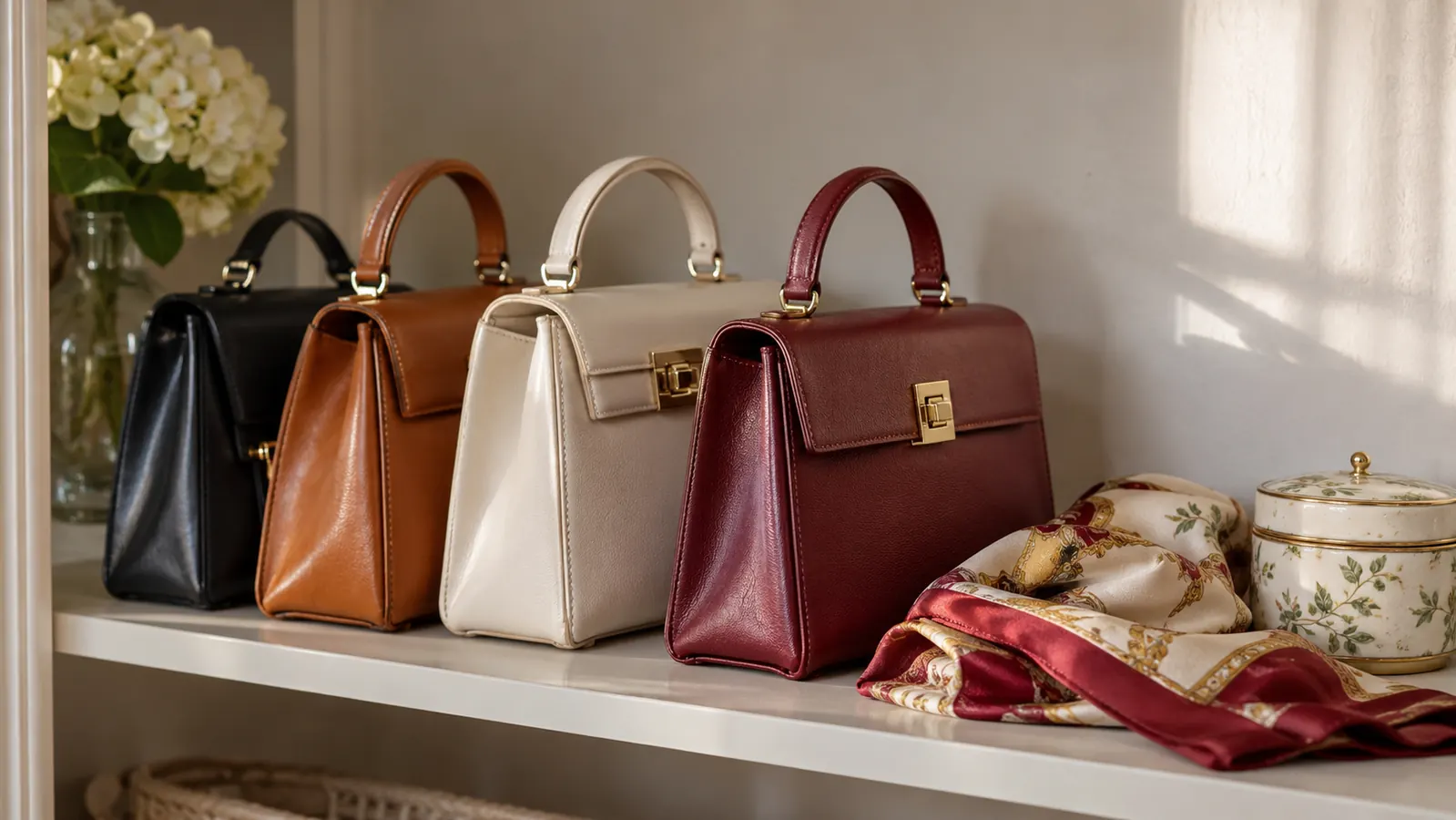
I brought it up at lunch, because that is what I do. One of my Thursday lunch friends has hers on top of a long dresser rather than a closet shelf and uses it for evening bags, and she is happy with it. Another said she bought something similar and wished the dividers were taller, which is the same complaint I have. A third asked whether it would hold her granddaughter's small backpacks, and I said yes, as long as they are not stuffed full and zipped to bursting.
The general agreement at the table was that this is a tool, not a piece of furniture. Nobody looked at it and said it was pretty. Everybody could see how it would work and where it would go in their own house. That is a fair summary of my own feeling after several months of living with it. Useful is a better compliment than pretty anyway, and this thing is useful within its limits.
Who This Is For
This is for you if your bags currently live in a stack on a shelf and you are tired of lifting four of them to reach the fifth. It is for anyone with a decent shelf depth, a collection of clutches, wallets and small structured bags, and no interest in drilling holes in a closet. It suits a spare room, a dresser top, or a closet shelf that has gotten out of hand. It is also a good fit if you rotate bags by season and want to see at a glance what is available. People who sell small collectibles use dividers like these for display too, and I can see why.
Who Should Skip It
Skip it if your bags are large. If your everyday bag is a tote, a satchel, or anything that stands taller than six and a half inches, this will not solve your problem and you will spend a week annoyed with it before you put it back in the box. Skip it if your closet shelf is shallow. Skip it if you want your closet to look like a boutique, because clear plastic does not do that no matter how neatly you space the dividers. And skip it if what you actually need is somewhere to hang bags, because this is not that and it will not become that.
Measure the tallest bag you own. If it clears six and a half inches, this earns its shelf space.
The clear sides, the adjustable dividers and the two separate bases do real work. So does the height limit. Now you know both before you buy, which is more than the listing photos will tell you.
Amazon Check Today's Price on Amazon →